Quick answer: Tianchi is the crater lake at the top of Changbai Mountain, formed by a major eruption in 946 AD. You can see it from the North Slope, where vehicles take you close to the viewpoint, or the West Slope, where you climb about 1,442 steps to a wide panorama. Fog and wind often hide the lake, so go early and keep a spare day.
TIANCHI IN NUMBERS
- Surface elevation: about 2,189 m. The highest surrounding peak reaches 2,744 m.
- Size: about 9.8 km², roughly 4.9 km north–south by 3.4 km east–west.
- Depth: about 213 m on average and 384 m at its deepest.
- Ice: typically frozen from mid-October to mid-June.
- Border: the lake is shared roughly equally between China and North Korea.
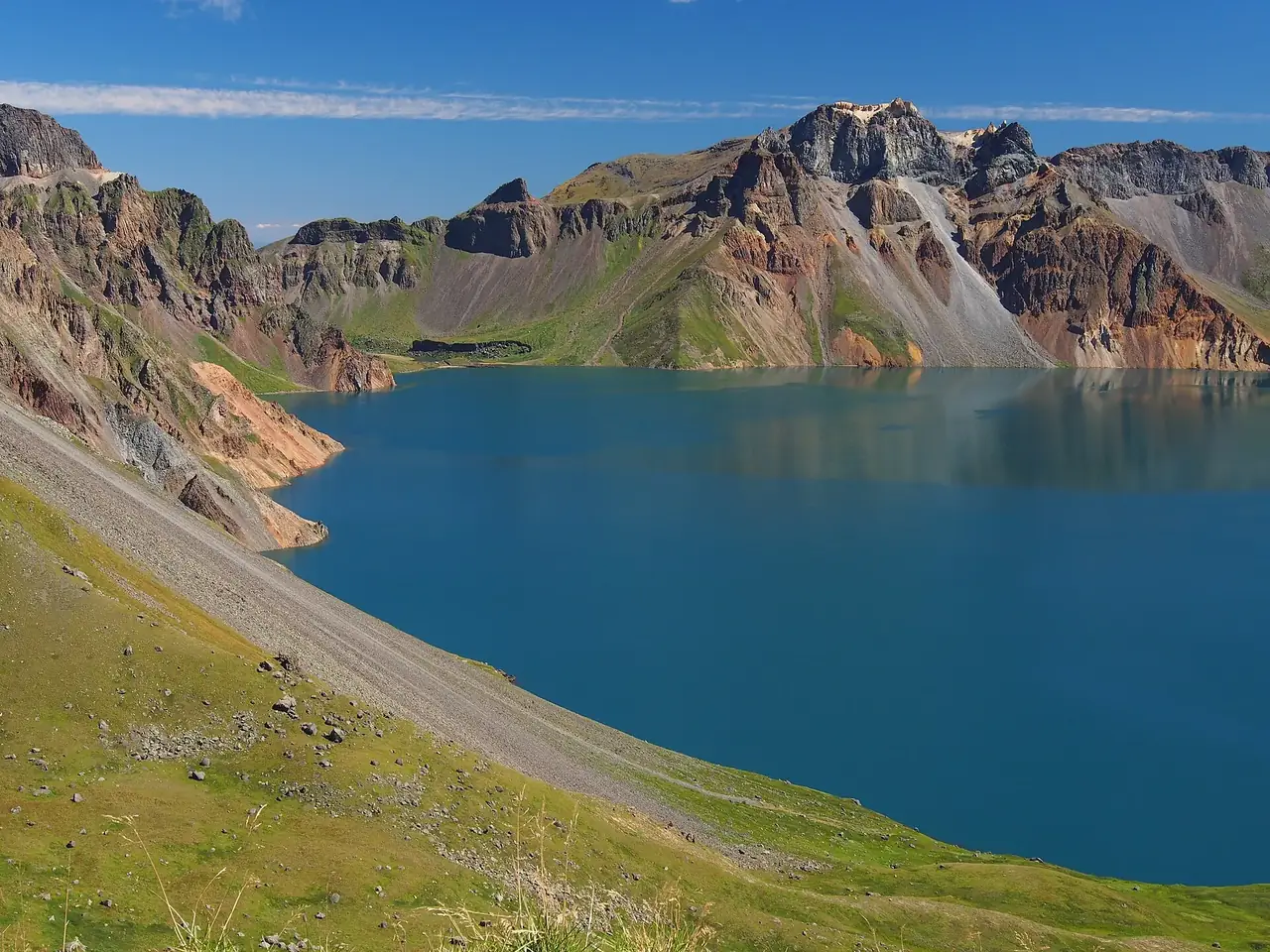
What makes Tianchi special
Tianchi fills the caldera left by the 946 eruption, one of the largest volcanic eruptions of the last few thousand years. Jagged crater peaks surround the lake, and its water leaves through a gap on the north side, feeding the Changbai Waterfall and the Erdaobai River. Because of its altitude and exposure, it can look completely different from one hour to the next.
North vs West viewpoint
| North Slope | West Slope | |
|---|---|---|
| How you get up | Scenic-area shuttle, then a smaller vehicle to the summit area, then a short walk | Shuttle to the car park, then about 1,442 steps (around 900 m of stairway) |
| The view | Looks down into the lake from the Tianwen Peak area, framed by crater peaks | A broad panorama across the lake. The border marker is here. |
| Effort | Low | The climb takes roughly 20–40 minutes depending on fitness |
| Combine with | Changbai Waterfall, Julong hot springs, Green Deep Pool | Jinjiang Grand Canyon, alpine garden |
How to maximise your chance of a clear view
- Go at opening time. Clouds often build through the day, and early slots are also less crowded.
- Keep a spare day. With two days on the mountain, you can move your summit visit to the clearer one.
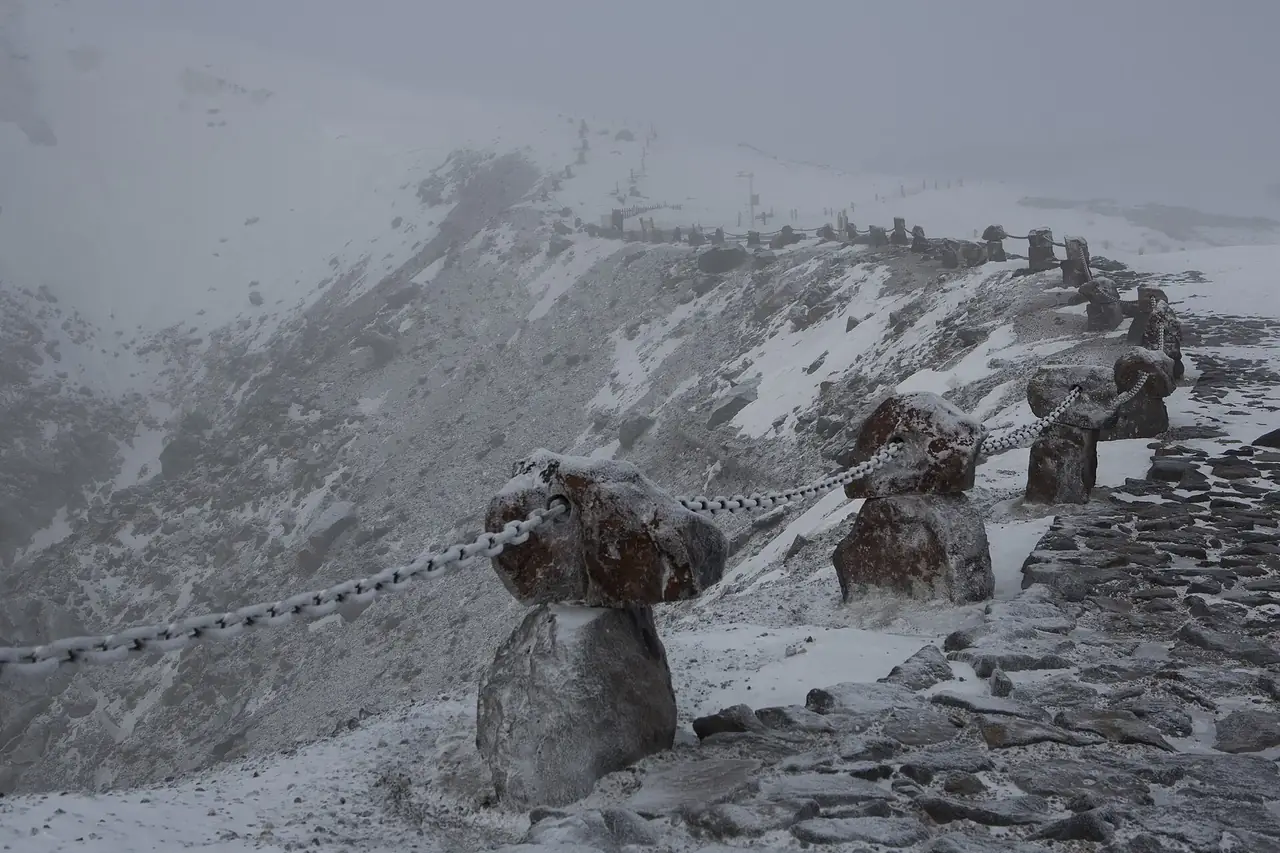
- Check same-day notices. The summit section can close for strong wind even when lower areas stay open.
- Pick your season. September often has crisper, clearer days. July–August is the wettest period.
- Don't rely on a town forecast. The rim is far colder and windier. See weather by month.
Tianchi through the year
- June: ice is breaking up or recently gone, and snow patches remain on the rim.
- July–August: deep blue water and green slopes, but frequent fog and showers.
- September: autumn colours lower down and sharper light. First snow is possible late in the month.
- Winter: the lake is frozen white. Summit access depends on conditions, so check before planning a winter visit.
Photography tips
- A wide-angle lens, or your phone's 0.5× mode, helps on the West Slope, where the panorama is huge.
- Bring a cloth for lens condensation. Fog can come and go in minutes, so wait for gaps.
- Wind is strong at the rim. Hold your phone securely and avoid leaning over barriers.
If the lake is hidden
On the North Slope, move on to the Changbai Waterfall, the Julong hot-spring area and the forest trails. On the West Slope, walk the Jinjiang Grand Canyon boardwalk. If your schedule allows, try the summit again the next morning.
Sources & official references
Last updated:
Turn the research into a trip
After choosing your route and dates, compare stays, experiences and transport in one place.
Trip PlannerCommercial links, when active, are clearly disclosed.Editorial note: scenic-area openings, ticketing, transport and weather procedures can change. Verify time-sensitive details with current official operators before travel.